EdgeBattery vs lithium-ion. EdgeBetaVolt vs every power source that runs out. EdgeSolar vs conventional photovoltaics. EdgeGen vs the utility grid. A complete sovereign energy stack grown from recipe files — no mining, no supply chain, no fuel delivery, no grid dependency.
EdgeBattery is a WATS-grown graphene-anode solid-state battery platform. No lithium. No cobalt. No nickel. No supply chain dependency on any geopolitically sensitive material. Sodium is 1,000 times more abundant than lithium and available from seawater. WATS grows the electrode architecture at atomic precision — zero manufacturing defects, zero slurry variation.
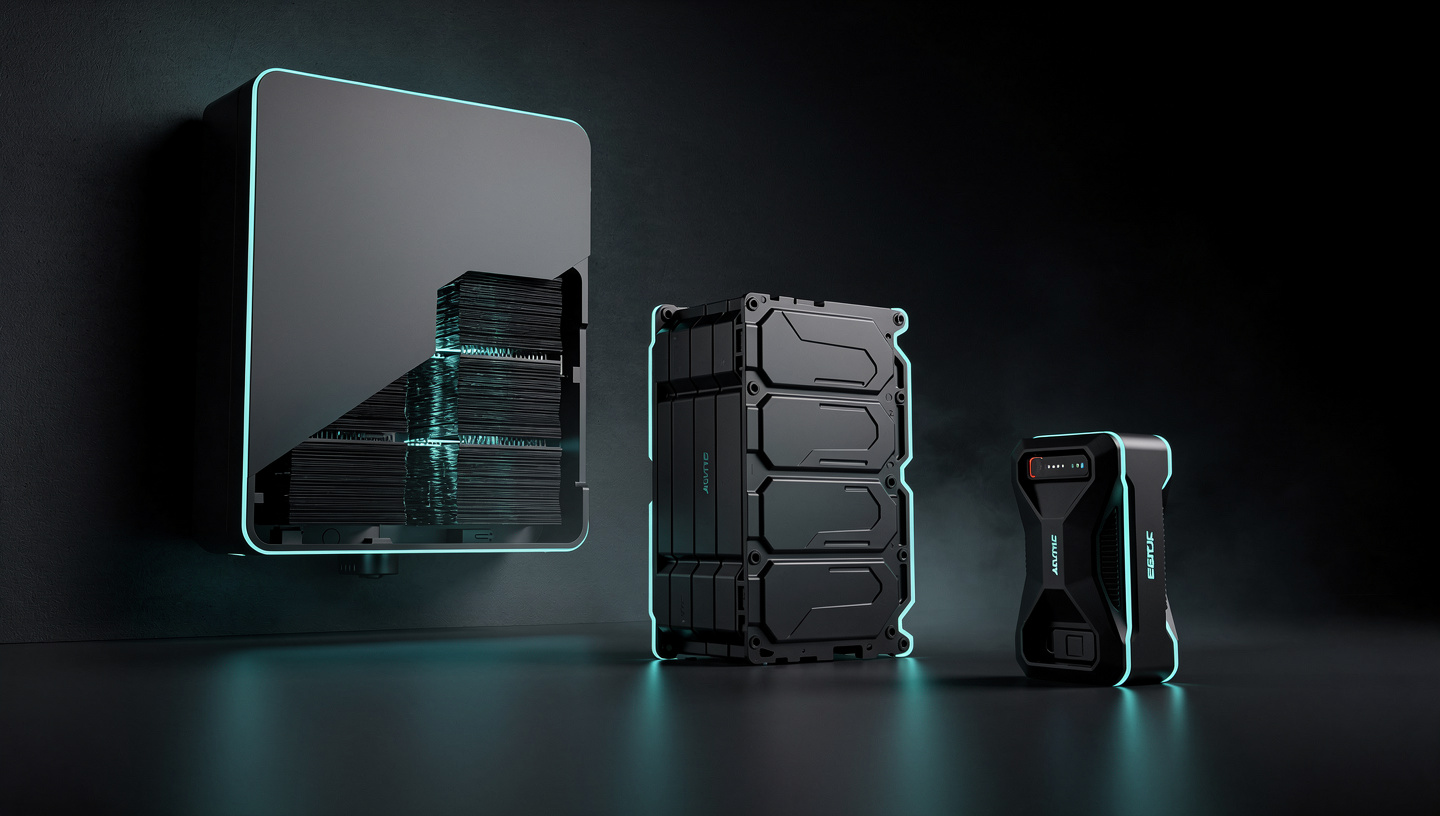
EdgeBattery ships in four commercial SKUs built on the same fabrication platform. The Home unit replaces the Powerwall. The EV pack replaces lithium-ion. The Industrial bank replaces grid-scale Li-ion storage. The Portable unit replaces every consumer battery on the market. Same chemistry. Same WATS recipe. Different form factor.
Because WATS grows the electrode directly — layer by layer, atom by atom — EdgeBattery achieves energy density and cycle life that slurry-cast manufacturing physically cannot reach. There is no degradation mechanism. The electrode lattice does not deform. The same cell that ships in 2029 performs identically in 2059.
Lithium-ion is a 30-year-old technology with a fundamental materials problem: lithium and cobalt are geopolitically concentrated, the electrode degrades with every charge cycle, and thermal runaway kills people. EdgeBattery solves all three at the materials level.
| Metric | EdgeBattery | Li-Ion NMC (Tesla, Panasonic) | LFP (BYD, CATL) | Solid-State (QuantumScape) |
|---|---|---|---|---|
| Anode Material | WATS-grown graphene — atomic precision | Graphite — slurry cast, defect-prone | Graphite — slurry cast | Lithium metal — dendrite risk |
| Critical Materials | None — sodium from seawater | Lithium + cobalt — DRC/Chile dependency | Lithium — Chile/Australia dependency | Lithium metal — supply chain risk |
| Thermal Runaway | Impossible — no liquid flammable electrolyte | Yes — documented EV fires, Megapack fires | Lower risk — but still possible | Reduced risk — solid electrolyte |
| Cycle Life | No degradation mechanism — effectively unlimited | 500–1,500 cycles (EV); 3,000–5,000 (grid) | 3,000–6,000 cycles | Claimed 1,000+ — unproven at scale |
| Manufacturing | EdgeWATS desktop — no gigafactory | Gigafactory — $5B+ capital per plant | Gigafactory — China-dominant supply | Not yet manufacturable at scale |
| Charge Speed | Fast — graphene anode enables rapid ion uptake | 20–60 minutes (EV fast charge) | 30–90 minutes | Fast claimed — not yet proven |
| Temperature Range | Wide — no liquid freezing, no thermal runaway ceiling | Degrades below -20°C, risk above 60°C | Better cold performance than NMC | Unknown at production scale |
| Geopolitical Risk | Zero — no critical mineral dependency | High — cobalt (DRC), lithium (Chile) | Medium — CATL China-controlled | High — lithium metal supply |
| Domestic Fab | Yes — WATS is US-designed, US-built | Partial — cells still largely Asia-sourced | No — CATL dominant | Not yet at production scale anywhere |
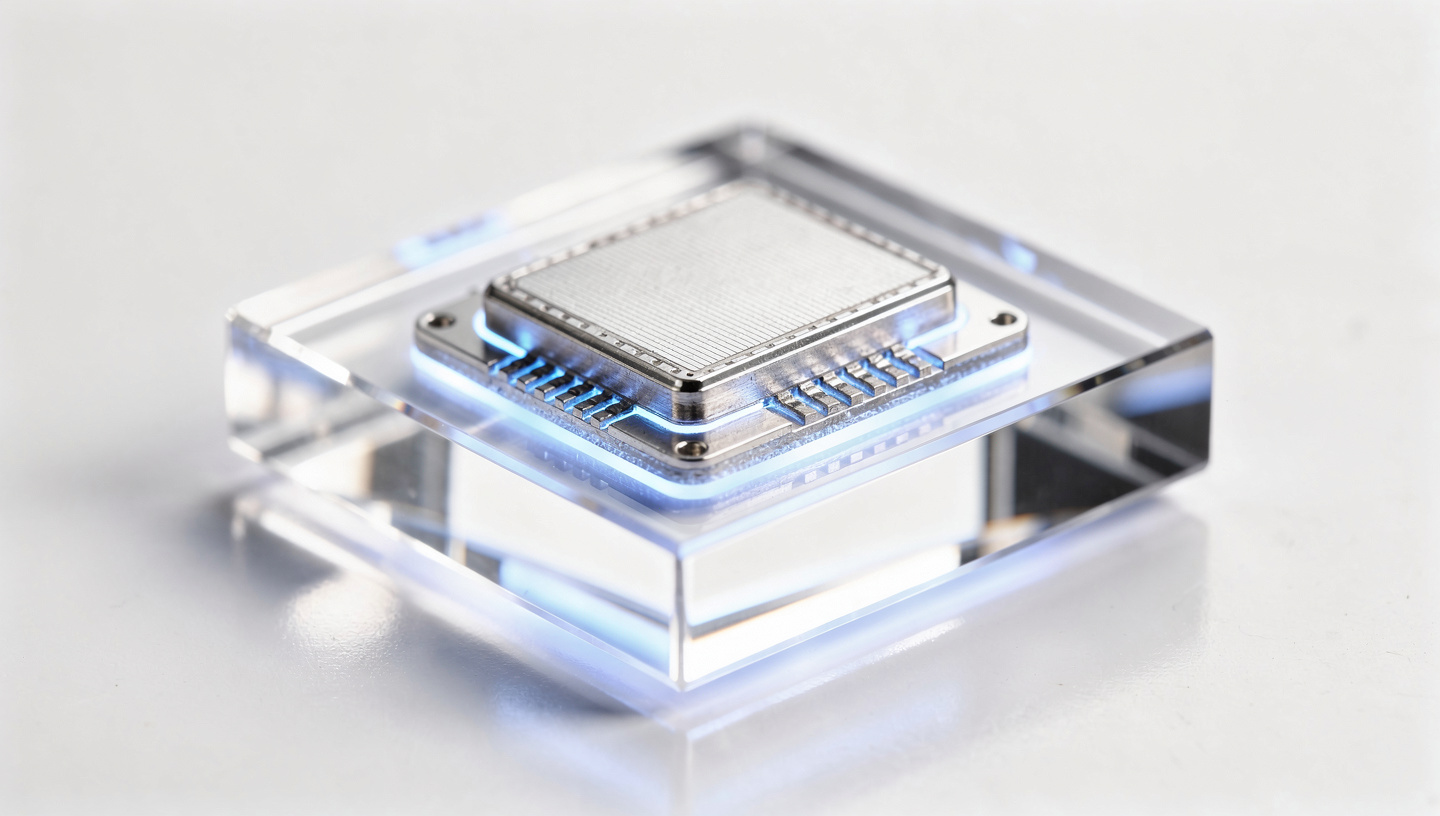
EdgeBetaVolt is a betavoltaic power cell grown on a C-12 isotopically pure diamond substrate using the WATS machine. Beta decay from a radioisotope source drives electron-hole pair generation in the diamond semiconductor layer, producing continuous electrical output with no moving parts, no fuel, no charging, and no maintenance for 25+ years.
C-12 diamond is the only substrate that can survive the radiation environment, conduct heat at 4,250 W/m·K, and provide the wide bandgap needed for efficient beta-to-electric conversion. No other material comes close. Silicon degrades. Conventional semiconductors fail. Diamond thrives.
EdgeBetaVolt-V is the voltage-output variant — powering sensors, IoT devices, implantable medical electronics, deep space instruments, and remote monitoring systems that cannot be serviced or recharged. EdgeBetaVolt-H&C is the heating and cooling variant — using the Peltier effect on the same diamond substrate to provide precise thermal control in aerospace, defense, and cryogenic applications.
A betavoltaic cell stack on a spacecraft hull means 25+ years of continuous power regardless of solar angle, orbital distance, or planetary shadow. No solar panel deployment. No battery bank. No RTG licensing. Power that simply runs.
Every other long-duration power source either runs out, degrades, requires servicing, or depends on environmental conditions. EdgeBetaVolt does none of those things. It runs continuously for 25+ years from the physics of beta decay — the same process that has powered NASA's deep space probes for decades, now miniaturized onto a C-12 diamond chip.
| Metric | EdgeBetaVolt | Lithium Primary Battery | RTG (Nuclear — NASA) | Solar + Battery |
|---|---|---|---|---|
| Output Duration | 25+ years continuous — decay-rate limited | 1–10 years depending on draw | 10–30 years — large, heavy, regulated | Weather/orbit dependent — not continuous |
| Moving Parts | Zero | Zero | None in RTG — but large thermal mass | None — but panel deployment mechanisms |
| Substrate | C-12 diamond — 4,250 W/m·K thermal conductivity | None — electrochemical cell | SiGe thermoelectric — low efficiency | Silicon PV — degrades in radiation |
| Radiation Hardness | Inherent — diamond is radiation-hard by nature | Moderate | RTG is radiation source — shielding required | Silicon PV degrades in radiation environment |
| Temperature Range | -173°C to +400°C — diamond stable across full range | Fails below -40°C, degrades above 60°C | Wide — but generates excess heat | Panel efficiency drops at temperature extremes |
| Form Factor | Chip-scale — millimeter to centimeter | Cell to pack — moderate size | Large — kilograms, significant volume | Panel area + battery pack required |
| Licensing / Regulation | Standard radioisotope — manageable regulatory path | None | Heavy — nuclear material, NRC oversight | None |
| Fabrication | EdgeWATS — desktop, domestic, no cleanroom | Standard battery manufacturing | Specialized nuclear manufacturing — very limited | PV gigafactory — largely offshore |
| Applications | Implantables, deep space, sensors, defense, remote | Consumer, portable, moderate-duration | Deep space only — too large/regulated for most uses | Surface applications with adequate sunlight only |
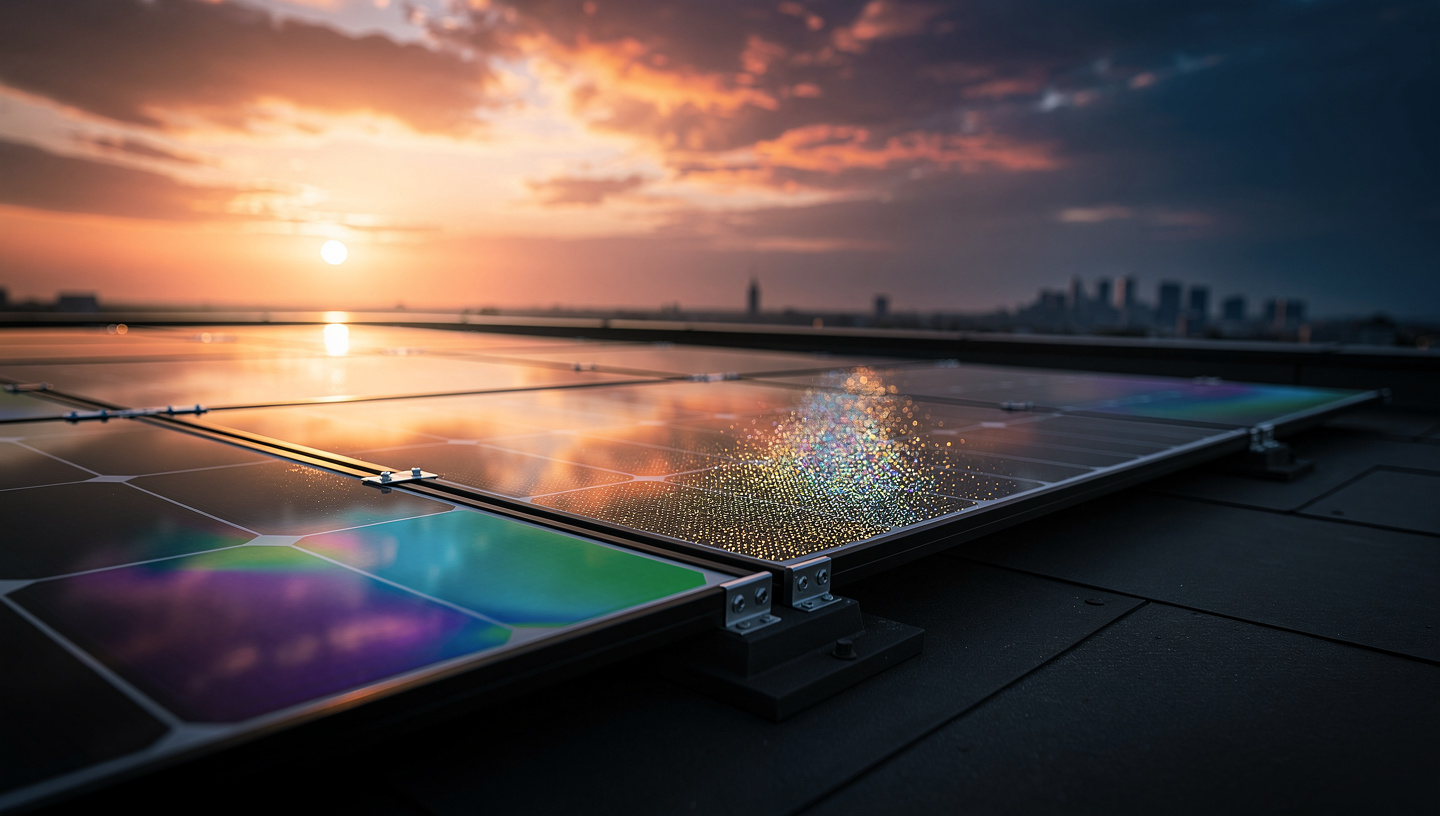
EdgeSolar is a WATS-grown quantum dot and photonic crystal tandem solar cell achieving 93% theoretical conversion efficiency. Conventional silicon photovoltaics are thermodynamically limited to ~33% (Shockley-Queisser limit) because they use a single bandgap and waste all photon energy above and below that gap as heat. EdgeSolar uses a multi-junction quantum dot stack — each layer tuned to a different part of the spectrum — to capture photons that silicon throws away.
EdgeSolar2 is the near-term commercial variant: a lead-free perovskite/silicon tandem achieving 34.85% efficiency with an atomic-precision recombination junction grown by WATS. The lab record for perovskite/silicon tandem is 33.9% — but it requires manufacturing precision that conventional fabs cannot achieve. WATS solves the precision problem.
EdgeSolar scales from rooftop panels to spacecraft hull coating. On EdgeCraft, the hull is EdgeSolar. The faster the craft moves, the more photons it intercepts per second. The propulsion system and the power system are the same surface.
Silicon solar has been incrementally improving for 60 years and is approaching its physical ceiling. The Shockley-Queisser limit is not an engineering problem — it is a physics constraint of single-junction cells. The only way past it is multi-junction architecture. WATS is the only fabrication method that can grow multi-junction quantum dot stacks at commercial scale.
| Metric | EdgeSolar (QD Stack) | EdgeSolar2 (Tandem) | Best Commercial Silicon | III-V Multi-Junction (Space) |
|---|---|---|---|---|
| Efficiency | 93% theoretical — quantum dot multi-junction | 34.85% — lead-free perovskite/Si tandem | ~24% — Shockley-Queisser limited | ~47% — lab, $100K+/m² |
| Lead Content | Zero | Zero — lead-free perovskite | None | None — but arsenic/germanium |
| Manufacturing | EdgeWATS — atomic precision, desktop scale | WATS atomic junction — solves lab-to-production gap | High-volume but efficiency-limited | Ultra-expensive — space use only |
| Spectrum Capture | Full spectrum — each QD layer tuned to different band | Two bands — silicon + perovskite | Single band — wastes UV and IR | 3–4 junctions — broad but expensive |
| Hull Applicable | Yes — grown as conformal coating on any surface | Yes — flexible substrate capable | Rigid panel only | Rigid panel only |
| Cost per Watt | WATS recipe — no exotic manufacturing cost | Near commercial silicon cost at scale | ~$0.20–$0.30/W at scale | $100+/W — space budget only |
| Radiation Hardness | C-12 diamond substrate — inherently radiation-hard | Moderate — perovskite improving | Degrades in radiation — poor for space | Radiation-hardened — but expensive |
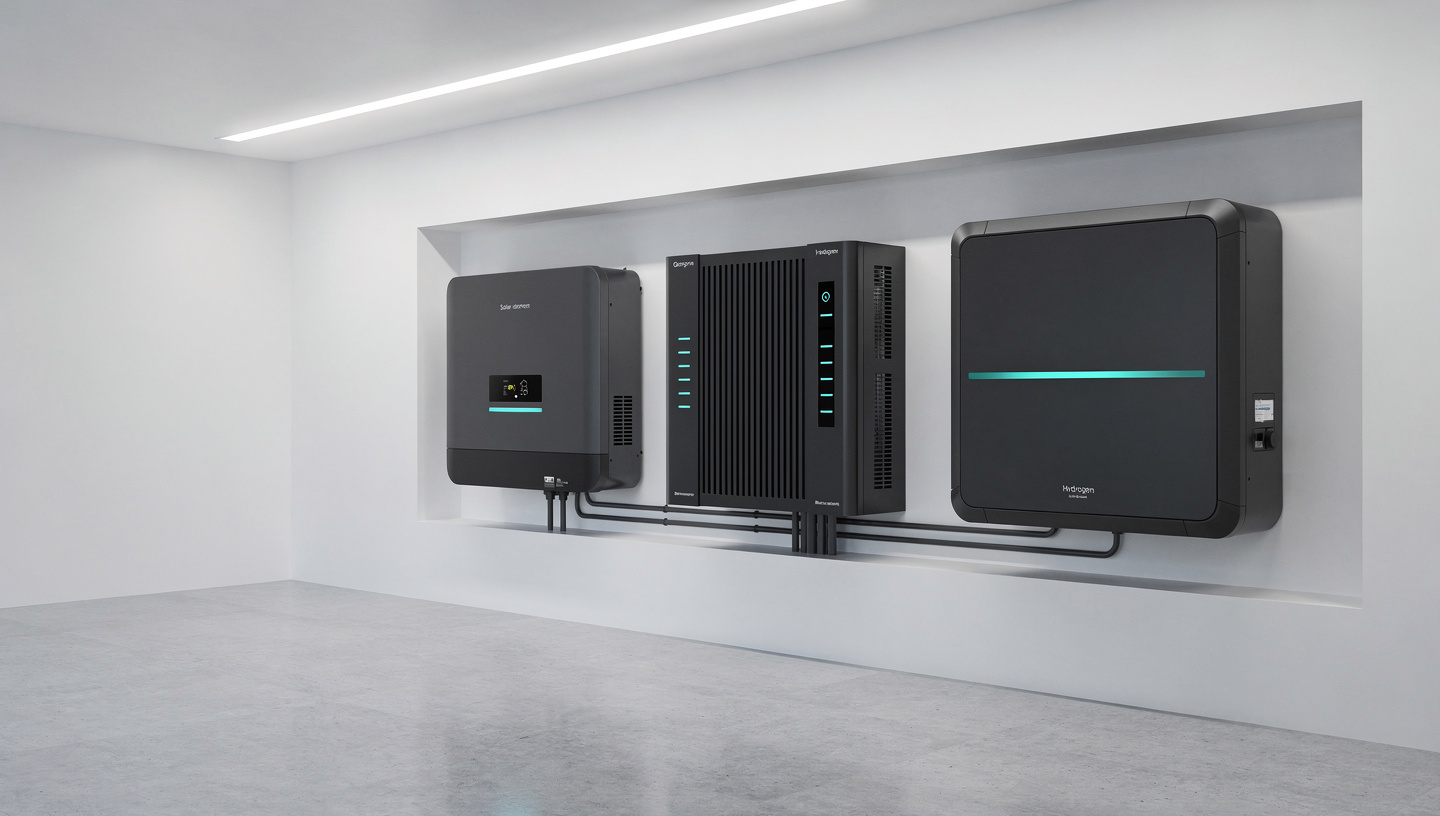
EdgeGen is a zero-fuel residential and commercial power generation system. Water — from a tap, an atmospheric collector, or any source — enters the EdgeElectrolyzer, which splits it into hydrogen and oxygen. Hydrogen is stored in EdgeHydrogen solid-state metal hydride modules at room temperature with no explosion risk. When power is needed, hydrogen plasma flows through the EdgeMHD-Gen magnetohydrodynamic converter, producing electricity directly with no rotating parts. The only byproduct is oxygen, which EdgeOxygen returns to the building's air supply.
The EdgeCapacitor QC-1 graphene supercapacitor bank sits at the output, providing instantaneous load response and 1-second recharge capability that no battery chemistry can match. EdgeGrid ties multiple EdgeGen + EdgeCapacitor installations into a distributed sovereign energy network — a local grid that does not depend on utility infrastructure.
A home or facility running the complete EdgeGen stack requires no utility connection, no fuel delivery, and no grid infrastructure of any kind. Water is the only consumable. Oxygen is the only emission. The system runs indefinitely, silently, indoors, anywhere on Earth.
No existing power generation system combines zero-fuel input, zero emissions, zero noise, indoor installation, unlimited runtime, and instantaneous load response in a single integrated stack. EdgeGen + EdgeCapacitor does all of it simultaneously.
| Metric | EdgeGen + EdgeCapacitor | Natural Gas Generator | Tesla Powerwall + Solar | Diesel Generator |
|---|---|---|---|---|
| Fuel Source | Water only — tap, atmospheric, or any source | Natural gas — pipeline or tank dependency | Solar — weather dependent | Diesel — delivery, storage, fire risk |
| Runtime | Unlimited — water is the only input | Limited by gas supply | Limited by battery capacity + solar hours | 8–72 hours per tank |
| Emissions | Zero — oxygen only byproduct | CO₂ + NOx | Zero operational — Li battery production impact | Highest CO₂ + particulates |
| Indoor Install | Yes — no combustion, no exhaust | No — CO risk | Battery yes — panels outdoor only | No — CO risk, must be outside |
| Storage Cycle Life | EdgeCapacitor — unlimited cycles, no degradation | N/A — generation only | Powerwall — 3,000–5,000 cycles | N/A — generation only |
| Charge / Response | 1 second — capacitive, not diffusion-limited | Instantaneous generation | 1–4 hours to charge Powerwall | Instantaneous generation |
| Noise | Silent — no combustion, no turbine | 65–80 dB | Silent | 70–85 dB |
| Grid Dependency | Zero | Needs gas line or delivery | Needs grid on low-solar days | Needs fuel delivery |
| Oxygen Output | Yes — improves indoor air quality | Consumes oxygen — degrades air | None | Consumes oxygen — must be outdoors |
EdgeBattery stores it. EdgeBetaVolt generates it continuously for 25 years without refueling. EdgeSolar harvests it from light. EdgeGen makes it from water. EdgeCapacitor delivers it in milliseconds. EdgeGrid distributes it without a utility company. Every product in this stack is grown by one machine, from one recipe library, with zero foreign material dependency. The grid doesn't disappear — it becomes irrelevant.